


The Holy Grail Of Engagement Starts With Your Employees
Jack Welch, the legendary former chairman and CEO of General Electric, nailed it when he told the Kansas City Business Journal, “There are only three measurements that tell you nearly everything you need to know about your organization’s overall performance: employee engagement, customer satisfaction, and cash flow.”
It’s a good bet that if Welch were to boil this down to just one measurement, he’d emphatically opt for employee engagement, because that’s where it all begins.
In the “Engagement Economy,” employee engagement is the tip of the spear. Done right, engagement is a continuum of goodwill, value and reciprocity. Think about it: employees -> customers -> prospects -> partners -> shareholders. If your employees are not engaged, you’re stuck in the starting gate.
Author Sybil F. Stershic (“Taking Care of the People Who Matter Most: A Guide to Employee-Customer Care”) writes, “The way your employees feel is the way your customers will feel. And if your employees don’t feel valued, neither will your customers.”
The fact is, whether employees or customers, people want to be understood and valued, they need to connect, and they like being part of something bigger than themselves. These are fundamental human desires, baked into our DNA.
We don’t function at full capacity unless we’re engaged — at least, not for long — and that holds true at work as well as at play. When not engaged, we tend to mentally check out, just go through the motions or drift to the sidelines, the competition or a new job.
The state of employee engagement: Not good
How does one measure employee engagement? Start with something that looks similar to Maslow’s Hierarchy of Needs.

But instead of showing fundamental human needs, take a look at different levels of employee engagement. At the bottom of our employee-engagement pyramid are the clock-watching not engaged and disengaged who are there just for the money.
In the middle are the almost engaged who are proud to work at the company but could be tempted to go elsewhere. And topping the hierarchy are the engaged and highly engaged who feel they are vital parts of the business, love working there and strive to inspire others. It’s not hard to see in which categories you want the bulk of your employees to be.
So, how are organizations in general doing on maximizing employee engagement and lifting their people to higher levels? The short answer is, “not well.”
Seventy percent of US employees are not engaged at work, meaning they are not involved in, enthusiastic about and committed to their work, according to a 2017 Gallup report. Evidently, this figure has not changed much in recent years.
Meanwhile, The State of Engagement (registration required), a new study that Marketo conducted with a third-party research firm, shows that, while 71 percent of global companies have an engagement strategy specifically for employees, only 26 percent of employees say employers are exceeding their expectations for engagement.
Clearly, there’s work to be done.
4 steps for moving the employee engagement needle
From my perspective, employee engagement is not a nicety. It’s an imperative. As marketers, we have to be able to practice what we preach, which means creating a culture of engagement inside our own organizations.
Based on my experience, here are the four must-take steps for any organization looking to create such a culture.
1. Make it a mandate from the top — Have a clear call to action, coming from the highest levels of the org, ideally from the CEO. Send the message to all management that if you are not driving employee engagement, you’re missing the boat, and the company is in danger of being ineffectual in the marketplace.
2. Make sure it’s marketing-led, in partnership with HR — Marketing owns engagement with customers, prospects and partners, and thus should also own employee engagement. Hire a person dedicated solely to overseeing employee engagement, reporting to a senior marketing executive, likely on the brand or communications team, so that your engagement strategy for your people is tightly coupled with your brand promise and values. Hold monthly or quarterly training sessions outlining actionable items your employees can do to boost their engagement.
3. Do some serious introspection — Start with examining how your company interacts with employees versus what your employees really want and need. What I discovered when I went through this exercise was that our engagement efforts were only going one way: We were not focusing on the employee journey, and we lacked a vehicle for ongoing listening and feedback.
You must send information consistently across the company and cannot take an ineffective transactional approach to encouraging employee behavior and actions. If you do this, you will fail.
4. Create a platform for the employee journey — Look at every touch point of the employee experience, from recruiting and on-boarding to enabling, listening, developing and retaining. Then you must design programs to drive intellectual buy-in (communicating vision, plans and “how you fit in”), emotional buy-in (gamification, social amplification, peer recognition and so on) and brand advocacy.
At Brantley Agency, we use our own engagement platform and have deployed a technology that’s easy for our employees to sign onto and use every day, from any device. It helps them to stay plugged into what is going on in the company, with each other and with the industry.
So does it work?
When my organization followed the steps above, did they lead to success? Absolutely. We can now measure engagement through employee activities, and since the launch of our engagement platform earlier this year, have seen our number of highly engaged employees climb significantly. I think Jack Welch would be impressed.
What’s even more impressive is that this kind of employee engagement is achievable within almost any organization that puts its mind to it and makes the investment.
As for those that don’t, don’t say I didn’t warn you.
Interested in learning more? Connect with us today.


The Future of Social Media Is Here: These Are the Trends You Need to Know
It’s time we talked about how you’re using social media. That’s right, this is an intervention.
We’re concerned about what you’re doing, and more importantly what you’re not doing.
Your lack of adoption of new channels.
Your total disrespect of mobile first users.
Your reluctance to try video.
Your fear of spending money on social ads.
Your results.
We’re concerned.

We bring up these concerns out of love for you and all of our B2B clients out there. You see, social media marketing has changed, but most social media marketers haven’t. You’re confused, you think the social media landscape is just for consumer driven businesses.
A modern social strategy is light-years away from the definition we used in 2012 and it’s time to adapt.
Adapt to a mobile first, video obsessed audience.
Adapt to new tactics that take advantage of new tools.
Adapt how we measure success and what we’re trying to achieve.
This isn’t a matter of making tweaks, we need to start over.
Why do we need a new start?
Things have changed — and that all starts with Facebook.
Flash back to 2012 with me for a moment. It was an eventful year: we were all watching Gangnam Style on our iPad 3’s, mourning the loss of Whitney Houston, and eagerly awaiting the Facebook IPO. An IPO that we were excited but unsure about.
It wasn’t clear at all in 2012 that Facebook had a viable business model. Investors were concerned if they could actually monetize. After the first few months of their IPO their stock was down and the future looked grim.
The fact that this was only 5 years ago Facebook seems ludicrous. Today Facebook is one of the fastest growing, most well known, most trusted, and most valuable companies in the world. Its only rivals may be Apple and Google.
Facebook’s success as a business is directly related to their success in mobile. In 2012 Mobile represented only 10% of Facebook’s revenue, today it accounts for 82%. They were able to move with users from desktop to mobile and create a totally new stream of revenue that corresponded with a big shift in consumer behavior.
This success has allowed Facebook to expand, given them the means to buy Instagram and WhatsApp, and spend time developing new products like Messenger.
The average person globally now spends 50 minutes a day with Facebook.
…there are only 24 hours in a day, and the average person sleeps for 8.8 of them. That means more than one-sixteenth of the average user’s waking time is spent on Facebook. – New York Times
These new products are big bets that they hope will have the same impact on their business as their shift to mobile did for them back in 2012. Below is Facebook’s ten year road map. An astonishingly ambitious plan to create multiple new products and revenue streams, most notably around messaging, video, virtual reality, and artificial intelligence.

Facebook has never been more important than now. They are innovating incredibly fast and changing the meaning of social media. It’s critical to figure out how your audience lives in Facebook (Instagram, Messenger, WhatsApp) because they are there, everyone on the planet is. Once you do figure out how you can use the tools Facebook offers to connect with them.
The Trends: New Channels, Video, Mobile, Ads, AI
There are five major trends that are defining this next wave of social media.
1) New Channels
One of Facebook’s most recent hits is Facebook Messenger. It’s one of a handful of new channels, along with Instagram, WhatsApp and Snapchat that’s dominating time spent on social.
In 2012 Social Media was the big three: Facebook, Twitter, LinkedIn. That’s it. Your goal was to engage and grow communities on these channels via desktop. The idea was to gain enough likes and followers so that you had a reliable distribution channel for your content.
Today, your audience may still be there, but there are many other places as well.

Social media usage hasn’t slowed down one bit since 2012, it’s grown and diversified.
You must know your audience and you must focus your efforts on the networks that are most relevant for them.
To make this happen, the role of the social media manager / marketer needs expand. They need to understand your target market, and whatever social channel they spend time in. That probably includes Facebook, Twitter, and Linkedin, but it’s now expanded to new networks like Instagram, SnapChat, Reddit, YouTube, WhatsApp, and more.
They should know how those networks work and be able to create the content that does best in those channels. This means that social media marketers need to be experts in ads, creating video, stories, messaging bots, and more.
Furthermore, their goal shouldn’t be to try to turn these places into a distribution channel. Instagram for instance isn’t interested in having users leave their app. They’ve made it hard for marketers to drive people from their app to a landing page without an ad.
A modern social media marketing strategy doesn’t try to drive people out of these sites, they turn these sites into a conversion funnel in and of themselves. They create amazing content that brings attention and use ads and technology to convert those users in network. No landing pages, no emails. This is true for all networks now, not just Instagram. More on this later.
2) Video
Instagram was one of the first totally visually focused social networks, at first it was almost all pictures. Its massive success served as a spark for the rest of the industry. Quickly other social networks started leaning away from text into images, and that trend continued to evolve towards video.
We all now have super computers in our pockets with strong wifi and cellular networks. This makes hosting, sharing, and serving video a fast, enjoyable experience.

The result is that video has become the currency of social media.
People want video. You may have noticed how much more video you’re seeing in your Facebook and LinkedIn feeds — expect more.
This may have impacted you, but for even younger audiences social has totally replaced TV. They still want to consume video and now these cord-cutters turn directly to YouTube, Instagram, and Facebook to get it.
All of this has already happened. It’s not new. This means if you haven’t figured out how your company or brand can produce relevant video you must act now or risk becoming irrelevant. Producing video should be something you add to your personal repertoire, but isn’t easy, and unlike blogging a bad product can hurt your brand and image. If you can’t do it yourself, get help. Lean on good freelancers or hire folks with experience to guide the way and help you build your video strategy and production arm.
Video should be part of all your marketing campaigns. It can be live, pre-produced, casual, or polished. You’ll figure out what works for your audience, but you have to get started now if you haven’t already. An easy way to figure out what to create is to always ask, “What’s the video element?” about every single marketing campaign your team creates. Once you get started start reviewing the data. Focus on metrics like watch time over views, and let that be your guide to decide what’s working.
3) Mobile
You, me, and everyone else in the world have relatively cheap, extremely powerful, mobile phones in our pockets. Wifi is now everywhere, and 4G networks can be found in all corners of the globe. This has made accessing the internet and consuming content on mobile much easier. And it turns out that as long as the experience is good, people prefer using their mobile device for everything.
A result of this is that social media is now almost all mobile. 80% of social usage now comes from mobile devices. Social media is growing like crazy and almost all of it is coming from mobile first or mobile only users. That’s right: some users in some regions only access the internet from their mobile device. How are you going to reach those users?
Obviously it’s important to know your own audiences trends, but the short story is your marketing should now also be mobile first. Assume that the majority of people you engage with or want to reach in social are coming from their mobile phone.
For most B2B marketers this is a hard pill to swallow. The school of thought is that mobile marketing doesn’t work for B2B. That mobile users on the go aren’t interested in a long white paper like someone accessing it from a desktop would be. And that forms with several fields turn off mobile users.
Those concerns are valid and true, but it doesn’t mean mobile marketing doesn’t work for B2B, it just means we need to change our tactics — and Facebook is eager to help.
Recently Facebook introduced Lead Ads, and they can become your mobile marketing strategy. There aren’t many shortcuts in marketing or life, but Facebook’s created a big one with Lead Ads.
The ad unit brings your content to users on the Facebook mobile app and Instagram. Its format allows you to feature your lead gen content, and a strong call to action. This is all great, but the magic comes after a user clicks on the ads CTA, they are served a form that is auto populated with their information by Facebook.
This dramatically increases conversion rates. We’ve seen this totally flip the script for some marketers. They are now actually getting a better cost-per lead at a higher conversion rate from their mobile campaigns vs. desktop.
Another great option for converting mobile users is Facebook Messenger. HubSpot CMO Kipp Bodnar recently wrote, “Facebook Messenger will be the next great marketing channel, and it is arguably the best way to engage with the Facebook community as a marketer.”
Step one is encouraging users to start conversations via messenger. There are lots of reasons why a customer or prospect would want to chat with you via Messenger. Maybe it’s to aid communications at an event you’re hosting, or perhaps to deal with a customer service question.
Whatever the reason, it’s a good idea to start doing it. Having access to people via messaging means have a direct, mobile first channel to people. In a world where people are ignoring email and spending the majority of their time on their phone in a Facebook property, this will be important. Start building a plan for how you can start messenger conversations now.
4) Social Ads
Most people would agree that a modern social media marketing strategy has to incorporate video and mobile, but do you have to use ads? The answer now is yes.
You don’t have to always be running ads or use them for every campaign. But if you can’t effectively use paid media to amplify your inbound marketing strategy, you’re going to lose to the competition.
Earlier I mentioned we are now in a world where pushing people off of social to your site to convert no longer works. That means ads are your main path to conversion in social now. Before you grab your pitchfork and start chanting “pay to play is wrong” let me say this: a good social ad strategy will make you way more money than it will ever cost you, and will help you compete with much larger businesses.
You also don’t need to have a massive budget to be successful. Ads can be easily scaled up and down, so when you figure out the right conversion path and reach profitability, dial things up.
All of the major social networks are aggressively trying to monetize their audiences. Most of them have been for awhile. Those monetization efforts started with exciting marketing solutions for big consumer focused brands, and they work.
Now Facebook and the others are looking for new audiences to build for. If you’re reading this you’re probably a B2B marketer who doesn’t work at a Fortune 500 company. That’s a great place to be if you want to start using ads.
Facebook and LinkedIn both now have great lead generation solutions built for a mobile audience. This is a big opportunity — and one you don’t want to miss out on. It’s important to build a strong social media advertising muscle now. Ads don’t have to be part of every campaign, but you should always consider it.
When you do decide to use ads, use them in conjunction with inbound. An ad that is only an ad is boring and disruptive. But an ad powered by great content that is part of a well targeted inbound campaign is something your audience will welcome.
5) Artificial Intelligence
Machine learning and artificial intelligence are ideas that marketers are chomping at the bit to put to work. But the question that hasn’t been answered is how? Social Media and Social Ads are the answer.
No other marketing channel has grasped AI like social. It defines what content you see, what ads you’re served, and how you engage with your friends. In many ways AI defines social, and it’s important to keep this in mind when creating content. There is no more optimizing for time of day or keywords in social, everything is defined by a machine learning algorithm specific to individuals. When you’re thinking about content try to think like the machines.
Facebook and others have now made the same AI that powers what content is shown to whom, available to better target your ads. When you run Facebook ads for instance, you have a powerful tool set of AI at your fingertips, even if they don’t make that obvious. Leaning on Facebook to target and optimize your ads is a very good idea.
Upload lists of your most valuable customers or highest priority prospect to Facebook and then implement Lookalike Audiences. With this data Facebook will put its AI to work by combining with their global user data to serve your ads to only the most valuable people.
Look, things are different. Facebook has changed the world, mobile and video are here to stay, ads are they way forward, and it’s time to leverage AI. But for all the change that has happened, inbound is still the way forward.
The best marketing will always be remarkable and focused on attracting people with the quality of its substance. And for all the advanced technology we have, the best marketing will still always be about people and personal connections.

No technology can replace the feeling someone gets when they feel like you’re talking only to them. It’s important to root everything you do in those concepts. It’s time to grasp these new concepts, tools, and tactics. If you can combine them with the fundamentals of inbound marketing, there is no stopping you.
At Brantley, we’re experienced in managing social media. We think about social media strategically: planning your posts, getting your approval, and then posting them for you. We can even handle engagement if you wish. It doesn’t get any easier. Use the form below to reach out and we’ll be happy to discuss options and get you a custom quote. We’d love to hear from you.
Interested in learning more? Connect with us today.

Digital Agencies vs. Internal Staff vs. Freelancers
Running your online presence can be a big task, particularly for a young construction or architecture business where you need to devote most of your time to actually doing the work. While many business owners think they can take on running a website and social media on their own, the truth is that it will often hurt your business more than help it.
You’ve got options though. In today’s world, the management of online presence has become a field in its own right, drawing many talented individuals. You’ve got three ways you can work with these specialists – hire them into your business, hire them on a freelance basis, or work with an agency.
Each of these three methods has its pros and cons, and in the end one of them rises above as being more suitable for small and mid-size construction businesses. So let’s look at these pros and cons…
Internal Staff
Wouldn’t it be great to have a dedicated team on hand, ready to move on whatever project needs to be done? They would become part of your internal culture, be invested in your company, and would get back to you right away. They would always be available, and you would have complete control of their schedule. Need more work done? Just approve overtime, or hire someone else!
Internal staff is the way to go if you want the utmost control of your marketing message. It also allows for extensive collaboration, bouncing ideas off of each other, and great brainstorming opportunities. You’ll be able to train potential managers for the future, groom the future of your business.
They would also be prohibitively expensive for a small- to mid-size business. For every employee, you’ll have to provide a competitive package, including insurance and benefits. You’ll have to deal with their taxes, and they still will require a high level of management. You get complete control, with the catch that you need to be there providing supervision on all projects. Are you equipped to manage a marketing professional? For a business owner with a lot of balls to juggle, this is just adding one more to the bunch.
On top of all that, there’s the issue of capital investment – you’ll need to purchase or rent the equipment they need, a list that can become rather lengthy if you want audio or video components to your web presence. When this equipment needs to be updated or replaced in a few years’ time, you’ll have to shell out once again. The overhead cost of internal staff is its downfall.
Finally, sometimes companies are tempted to try and hire a small staff that can do it all – one or two people to do tasks that range far and wide. Don’t do this! If you try and get one or two “jacks of all trades” and heap all of the work on them, they will be stretched thin and burned out in no time at all.
Freelancers
Freelancers often seem like a great choice for businesses who want little or no involvement with their online presence. They generally come cheaper than the other two options, with the ability to seek lowest bidders. You don’t have to keep them on payroll when they aren’t in use, and you aren’t responsible for paying any sort of taxes for them.
Unlike internal staff, there is little to no overhead involved in utilizing freelancers. Each freelancer needs to supply their own specialized equipment to fulfill the task you award them. Cameras, lighting, software, none of it comes out of your pocket. All you need is a computer to put the final units together into your comprehensive website.
Unfortunately, wrangling a team of freelancers can be difficult. They need a lot of management, and quality control falls to you. If you aren’t specific and cautious, you can end up shelling out for bad workmanship and the freelancer disappearing. Many freelancers gravitate towards freelancing because of the flexibility it offers, but this can lead to limited availability and poor response times.
They won’t share your vision, and there may even be conflicting interpretations in the work they return to you. They all have their own methods of execution, and may not feel responsible if their methods end up hurting someone else’s product or deadline. Their mercenary nature means that some may jump ship to chase another offer with little to no notice, leaving you hanging.
So sure, the lack of internal cost is a bright spot for freelancing. You may even find some high-quality freelancers who end up working well, and who are solid contributors. But wouldn’t you like to have a bit more control over those working on your website or day-to-day marketing, along with set-in-stone reliability? What’s cheap is not always necessarily good, and a bad website can be worse than no website at all. You’ll still need someone on staff at your business who has a good sense of your marketing needs to coordinate, unless you want to pilot the ship alone.
Digital Agencies
It’s always good to have a middle ground, and that’s where digital agencies come in. They take bits and pieces of the previous two methods and combine them into a convenient package.
You may not have the same level of investment into your internal culture, but agencies have their own cultures. Finding one that jives with your company’s culture shouldn’t be too difficult. Running your account at a digital agency would be a devoted account manager, someone who would get back to you in minutes with a response, or at least let you know they are working on whatever your need may be. You won’t have to potentially wait until two days later, like you may have to with a freelancer.
You’ll also have a raft of experts on hand when you need them. You don’t have to go out and hire someone, or find a freelancer. The agency will have someone who can fulfill the task that needs to be done. You don’t have to worry about complex benefit and payroll either – you pay the agency their flat rate, and they deal with all the nitpicky paperwork. There’s no overhead for you, and you only pay when you need it.
Some project management responsibilities will still fall to you if you work with a digital agency, but nothing like with the other two options. We’re talking minutes of your day, not hours or an entire shift. You’ll be working with marketing experts who have spent years working in the industry, and who have honed their skills over time. They will need focused but minimal input, and they will need feedback from you over the course of the projects. But for the most part, you will just point them in the right direction and sit back to await the results.
Of course, we here at Brantley think digital agencies are the best option. After all, we are one. But even looking at the options objectively, it’s clear that for the vast majority of small and medium-size construction or contracting firms a digital agency is the best option. Why?
- You want the best possible product, at the right price.
- You want creativity and originality, devotion to the details, and content that is superior.
- You want a one-stop solution.
- You want an efficient, unified effort towards the goals of your business.
- You want cost-effectiveness.
So when you are ready to let a digital marketing agency take the reins and help your business solidify itself in the online world, reach out to us here at Brantley. We will help you get that competitive edge to grow into the future.

Interested in learning more? Connect with us today.

Beginners Guide To Email Marketing For HVAC Businesses
Beginners Guide To Email Marketing For HVAC Businesses
The variety of marketing channels open to the modern HVAC company is vast. From the tried-and-true old-school methods like dropping business cards off at receptionists to cutting edge digital marketing, messages have so many avenues to travel. You need to find one that is a perfect fit for your business, and that provides the greatest return possible.

Why Use Email Marketing?
With all of those options out there, why should you be making email marketing your focus? Well, there are a number of reasons:
- Efficient: The key advantage that e-mail marketing provides is Return on Investment (ROI). As Campaign Monitor notes, e-mail has been the leading channel when it comes to ROI. This isn’t a flash in the pan either, it’s been the leader for 10 years, generating $38 for every dollar spent in the most recent observed period.
- Engaging: Various studies and sources argue the exact number, but it’s undeniable that email marketing is more engaging, and results in more conversions. McKinsey claims that email marketing is up to 40 times more effective at acquiring customers than Facebook or Twitter.
- Immediate: In a mobile society, where everyone is attached to their phone, it makes sense to use a channel that can make use of this. As Campaign Monitor noted in a related article, as early as the fourth quarter of 2012 the mobile phone was the preferable environment for email opening. According to Convince and Convert, 35% of business professionals check their email on a mobile device. This means your email marketing messages can have immediate impact.
- Customizable: Unlike many mass-market channels, emails are easily customizable. You’re not just addressing the businesses you work with, you can address the decision maker you are targeting. You can target different segments with specific messages, instead of being stuck with a single catch-all message.
- Measurable: All those statistics above sound impressive. And that’s what makes email marketing a great tool – the ability to gather solid statistics. Traditional off-line methods such as television and print media really can’t measure the conversion percentage of their messages. Email allows you to track openings and click-throughs, letting you evaluate what works and what doesn’t.
- An Opportunity for Automation: Marketing can be a massive investment, not just monetarily, but in terms of man-hours devoted towards creating and maintaining the message. An email marketing campaign can be mapped out for automation, with programs and tools allowing you to designate what messages go to what receivers on what days, in bulk. This can free up your staff to concentrate more on fine tuning the message instead of worrying about how it is delivered.
Getting Started
Before you get moving, you need to set up a foundation for your program. This means two things: a way for customers to sign up, and an email marketing service.
 Don’t have time or personnel to manage this? Don’t worry, Brantley offers email marketing packages. We do all of the work and your business reaps all of the rewards. Sounds pretty awesome right? It is! If you want to tackle this yourself, follow these steps:
Opting In
Getting your audience isn’t just sending an e-mail to purchased mailing lists. This will get your e-mails dumped into the junk folder – and justifiably. Your audience needs to be constructed from people who are ready to invite you into their business because the hope is that, eventually, they will actually invite you into their business.
So how do you go about building an audience for your HVAC business? Inviting potential customers to subscribe is easy, but if you don’t have some sort of bait, you won’t get them to bite. Consider some of these ideas to entice potential customers to sign up:
 You need to be concise with your offers as well. Don’t just offer an e-mail series, provide specific days that the series will be e-mailed. Provide the customer with information regarding how often they will receive e-mails, the types of offers that may be provided, and the relevance to them.
Once you’ve got the “how”, you need to figure out the “where”. You need to place your opt-in form in a spot that is regularly seen, but not excessively intrusive. Certain spots are more likely to lead to subscriptions and conversions:
- On a designated sign-up page.
- As an exit-intent popup.
- In your site’s header or footer.
- In a welcome gate, which is a full screen overlay that pops up when a person accesses your site.
- In a timed lightbox popup.
- On one of your high-traffic pages, including the About page or on a designated sign-up page.
- In a floating bar that is attached to the top or bottom of a visitor’s screen, and scrolls along with them.
- On a designated sign-up page that is linked throughout the main menus of your site.
- On your blog archive page or within your blog posts themselves.
The exit-intent popup is extremely efficient, with Conversion Sciences estimating that they convert at up to a 9.7 percent rate.
When you have potential clients signing up, you’ll need a way to manage your lists, your email blasts, keeping track of click-throughs, list segmentation, and so much more that comes with successful email marketing. This is where an email marketing service comes in. There are plenty out there – marketing services such as AWeber, Constant Contact, and MailChimp. These are large, veteran service providers, although you will want to consider your needs.
Smaller marketing services that target themselves towards specific niches may be the better fit. While those agencies are managing businesses across a vast spectrum, an agency like Brantley Agency better understands the needs of an HVAC business. Bigger isn’t always better. Make sure your email marketing service has specific abilities that will be important to you as you grow.
Email List Segmentation
Segmentation is the idea of breaking your subscribers into significant groups. There are no set groups that are recommended – you’ll need to have an idea of your customers, and what may appeal to some of them. Consider groupings such as:
- Length of Subscription – New subscribers will be looking for a welcome email or series soon after joining, which would be useless to long-term subscribers.
- Preferences – Consider adding survey options to the opt-in that would let subscribers choose what they want to hear about. Some may be more interested in white papers, others may only want deals or specials.
- Location – You may want to provide specific information based on where customers are located.
- Engagement Rate – Reward your more engaged subscribers with special offers, or send special offers or information to low-activity subscribers to boost their engagement.
- Optin Catch – Keep track of what offers or magnets lead subscribers to actually sign up, and group them accordingly. Chances are, if someone signed up because of a white paper offer, they’ll want to continue receiving emails including white papers.
- Device Habits – Emails read differently on mobile devices versus desktops and laptops, so consider having different segments that allow you to send e-mails with formatting that will work better with your customer’s device habits.
- Website Activity – Monitor where your subscriber clicks to on your website, and segment them based on where they generally go.
- Company Position – You may have customers sitting in different positions within their companies. Some may be high-level decision makers, some may be more towards the hands-on operations role. Every position has certain pain points or desires.
Segmentation success isn’t just anecdotal – MailChimp provides some serious statistic support for this. Users noted that segmented campaigns provided 14.31% more openings, 4.65% lower bounce rate, and 9.37% lower unsubscription rates than non-segmented campaigns.
Crafting the Right E-Mails
It’s been over two decades since Bill Gates told us that content is king, but the idea is as true today as it was then. At the heart of every e-mail campaign you must have quality content. As a company, you aren’t just a purveyor of HVAC solutions, you need to be a creator of useful information that is pertinent to your customers.
The good news is, there is a wealth of information out there, and an incredible talent pool of researchers, writers, graphic design artists, and other creatives looking for work. You’re an expert in the HVAC field, but knowledge is not always easy to translate. These are the folks that can take your knowledge and dress it up to appeal to your clients.
Building
Your email marketing campaign has the end goal of creating and growing leads, but you can’t make every single email a sales email. That’s a great way to get a mass of unsubscribe clicks, real quick. Instead, provide the reader with value.
- Provide useful and timely information.
- Use reader-forward language – don’t sound like a soulless company, provide character and use everyday language that is easy to understand and process.
- On the flip side, don’t get too familiar. Overusing names or titles can get a little creepy. It’s great to address the email to the person directly, but if you use a name or title more than once or twice in an email, it starts to sound stilted and stalkerish.
- Pay attention to formatting – make your email easily scannable by using the same ideas as you would in a blog post or on a web page. This means utilizing headers, boldface type, numbered or bulleted lists, and other formatting that draws the eyes to key points.
- Provide images as well as words, as many readers will be turned off by long blocks of text-only. Pictures, infographics, and other bursts of color will make your email more appealing and will hold the attention of your reader.
- Make sure your emails are on-brand, fitting with the rest of your content and internet presence.
Find good sources for ideas to work off of – there are plenty of news sites out there specifically for the HVAC industry. The Air Conditioning, Heating and Refrigeration NEWS is a great place to start, as they will always have pertinent, current information that you can expand from. Other sources include HVAC & Refrigeration Insider Online, HVACR Business, Supply House Times, Engineered Systems Magazine, and Contractor. If you’re not already reading these for your own HVAC business, well, get on it!
You also need to consider that you will need to provide consistent content. You can’t send sporadic emails only when you have something to say, you need to be regular. This means planning out and rationing your content weeks or even months ahead of time. If you disappear from mailboxes, your readers may start to let your HVAC business fade from their radar. So don’t blow all your good ideas early on – hold some back to stay at the forefront of your readers’ minds.
Testing
Test everything. Have emails sent to your personal address or the addresses of coworkers to ensure that they are delivery-ready. Does it go to your inbox, or to a spam folder? Does the subject line appear correctly? Do you or co-workers note any errors that weren’t caught in the creation and editing process? Do all the links work correctly and direct the reader to the correct spot?
Testing is your last chance before your email it goes live. Don’t skip it or skimp on it.
Setting the Hook
No matter what is inside the email, you need to set the hook with a solid subject line. A bad subject line can turn away your HVAC customers, get the email ignored, get your email sent to the junk bin, or worst of all, prompt people to unsubscribe. Here are some hints for writing a subject that will get your readers to open the email.

- DON’T USE ALL CAPS. It’s shouting. No one likes being shouted at.
- Stay away from emojis, excessive or odd punctuations, slang, or text shorthand. These are professionals you’ll be addressing.
- RE: and FWD: are also bad news. It is misrepresentation. You’re trying to build trust, not weaken it.
- Make it short, clear, and to the point. Twitter might let you use 140 characters, but a good subject line should be a third of that at most.
- Make sure it is relevant to the message within. Click bait will ensure that customers never open one of your emails again.
- The simplest hint? Write a subject that would convince you to open it.
A good subject line does one thing – drive openings.
Analytics and List Management
As we delve towards the more advanced area of the spectrum, you’ll need to consider analytics to grow your campaign over time. Having the right information, analyzing it, and knowing the context of the numbers will let you mold your message, fine-tune your segmentation, and dictate further content.
Types of Analytics
There are a variety of analytics you can study, but the four most important ones are click-through rate, conversion rate, bounce rate, and list-growth rate.
 Click-through Rate is the percentage of email recipients who clicked on one or more links contained in a given mail.
- Conversion Rate is the percentage who not only clicked on one or more links, but acted following that on a desired action, such as scheduling a service, entering product information requests, or similar.
- Bounce Rate is the percentage of total emails that could not be successfully delivered. Unfortunately, a high bounce rate can trigger an ISP to think of your company as a spammer. Remove hard bounces – invalid, closed, or non-existent email addresses – as soon as possible from your mailing lists.
- List-Growth Rate is simply tracking the growth or decline of your mailing list. Database decay is a real, unavoidable thing. You need to regularly be driving for leads to refresh your mailing list. A better mailing list is a longer reach, positioning your company better for an increase in business.
Other metrics such as open rate and unsubscribe rate are usable, but not always useful. For instance, you may have a very low unsubscribe rate, but if you also have a very low click-through rate, it may mean that your emails are getting put straight in the trash or junk folder.
A high open rate doesn’t mean your message is working, just that the email is being opened. However, emails are often only counted as “opened” if the images imbedded in the message are received, a problem if many of the companies you work with use image-blocking in their email client. Both these factors make open rate an unreliable metric.
What to Do With Metrics
Once you have the information, you’ll need to use it. Analytics is a pretty deep rabbit hole to go down, which is why most HVAC businesses hire professionals who are experts in the field. That being said, you can use combinations of metrics for a variety of things.
Low open rate? When coupled with a low bounce rate, this indicates your readers are skipping your e-mails. Try working with your subject lines and conduct A/B testing to see what subject lines create more openings. Vary the time of day they are being sent out. Make sure that the autoresponders being sent are really relevant to the list that is getting them.
Low click-through rate with a high open rate? Your message isn’t targeted enough, and your copy needs to be improved. Work more on supplying quality content. Have you offered real value in your e-mail? Is the call-to-action clear, and is the click-through link easy to find?
Rapid decline in list growth rate? Review your recent emails and see if a specific e-mail or piece of content has lead to readers turning away. Review why people signed up for your list, what list segment you put them in, and see if you have moved away from why they signed on in the first place. It’s possible you have moved away from “value” emails and more towards sales emails.
Low conversion rate? Maybe it’s time to think less about growing your list, and more about growing your leads.
Using and tracking the right metrics can help you fine-tune your marketing campaign and move forward, improving the chances of the results you are looking for. You need to be cautious however, understanding that metrics are a result of a combination of all the moving parts in your campaign. There is no guaranteed fix. But they can be used to start nudging your email marketing in the right direction.
The end goal of all of this is to build a program that will allow you to keep customers in contact, bringing them back to you for their HVAC needs time after time. Email marketing for your HVAC business can be an incredible tool, providing you have the ability and understanding to make it work. If it seems too daunting, don’t worry – that’s what we here at Brantley Agency are here for.
Interested in learning more? Connect with us today.

101 Social Media Ideas for Contractors
THE ULTIMATE LIST OF SOCIAL MEDIA IDEAS FOR CONTRACTORS
Social media has become a foundation in the way construction businesses connect and communicate with existing and future customers. Generating social media ideas for businesses in the construction industry can be a challenge. Let’s face it…your work isn’t always the most glamours. Don’t worry, we’ve compiled the most comprehensive list of social media ideas for businesses in the construction industry.
1. A Day In The Field:
People love to see what goes on during a construction project. Post a picture of your crew tackling the task at hand.

2. Host An Internal Contest:
Contents are a great way to get people in your company and your followers to engage with you digitally. Hensel Phelps enrolled their Southeast District Interns in a Push Cart Race! We love the team spirit!

3. Show Progress
Don’t just show touched up images of a project once it’s complete, show your followers the steps it takes to get there. Progress is fun to watch and keeps viewers engaged in your company.

4. Family Photos:
Photos of your team with their families are some of the most engaged posts that businesses share. Showing the people behind your brand and their lives outside of work gives your current and past clients insight into your business!

5. Shout Out To A Sub:
Show your subcontractors, manufacturers or vendors that you care about them too! Anytime you show people in your digital marketing, you help humanize your brand!

6. Share News From Another Source
Follows blogs like ConstructionDive, AEC-Business or ENR News and set up a Google Alerts account to stay current on industry trends.

7. Share Party Pics
Take some photos at your next office party and share them with your followers. It’s great for past, current and future clients to gain an understanding into your company culture. It sure looks like Oltmans has a great team that likes tacos on Cinco de Mayo!

8. Behind The Scenes Photo:
Post a picture of your office staff collaborating or even your new order of construction supplies making it to your yard.

9. Give Industry Insight:
If you want your past, current and future clients to view you as the expert in the industry, you better act like it. Consistently posting industry insights with great graphics or imagery shows your followers that you know your stuff.

10. Offer Detail Videos of A Trade:
Whether you’re a mechanical contractor, electrician, or general contractor, posting a detailed insight into the tricks of the trade is always a hit.

11. Share A Comical GIF:
When others laugh, you develop relationships. Blaming the construction manager for a flue pipe penetrating the boss’s office is a quick winner.

12. Show A Work/Life Balance:
From sunrise to sunset, contractors are known for working their tale off. Showing a work/life balance helps to humanize your brand and connect with people in their own struggle to find the balance.

13. Provide A Link To Your Most Popular Blog Post:
Blogs for contractors are important. Sharing them with your market is even more important.

14. Quotes:
Motivational or funny quotes get tons of engagement.

15. Statistics:
Share statistics on the amount of construction underway in your market or information on the rising cost of construction materials like Turner has done recently on their LinkedIn profile.

16. Food
Food posts are the most shared posts on social media.Share photos of your team lunches or when you have a special desert brought in to celebrate a retirement. I know, you’re wondering how this helps your business. Social media is all about showing the human side of your business. Studies show it makes you more likable and trustworthy.

17. Link To Another News Article About Your Project:
Some of your projects get major press. Put links on your social media to those projects to drive awareness and buzz about your company.
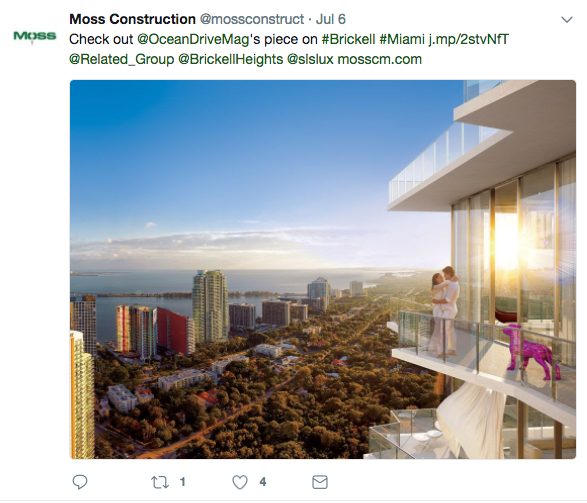
18. Post A Branded Image:
Your brand is your identity. Push your brand through social media platforms by adding your logo to engaging images.

19. Infographics:
This is the hottest trend in 2017 for contractors on social media. An infographic is a quick visual snapshot and provides customers with a unique way to understand your message. The best infographics for contractors tend to be those about employment trends. Check out an example of an infographic we did on the Influence of Colors in Marketing.
20. Commodity Photos:
This is best on Instagram or Facebook. Post a picture of your lumber yard, sheet metal, or nail patterns on a new framing job.

21. Unrelated Photos:
Though you are always thinking like a contractor, your customers are not. Post a picture of a family, a puppy, or a child doing something humorous. These posts get a ton of shares and help to humanize your company.

22. Share A Company Value
Your company values help define how you interact with clients. The more insight you can paint into the inter-workings of your company, the better!

23. Link To A Controversial Website Or Blog Post:
Be careful and avoid party-based political posts or religion. Contractors are best to find controversy with the labor market and lack of training in public education.

24. Share A Trending Google Search:
This is one of the more simple but effective social media ideas for contractors. Visit Google’s Top Charts on Construction to find out what people are currently searching.

25. Get Into The Community
Share photos of your team in the communities in which your followers live, doing the things they are also doing in their time away from work. Anything to humanize your brand creates a deeper relationship with past, current and future clients.

26. Share A Picture Of Your First Office and Staff
People love to see where you came from, especially if your company is over 50 years old. Pictures from the 1960s and before have an engagement rate and share ratio significantly higher than other types of posts. We love this photo from PCL Construction, who is now one of the world’s largest GCs.

27. Show That You Support Women In The Construction Industry
19 out of 20 professionals in the construction industry are men. Show your followers that you value a diverse working environment and value the women employees of your company.

28. Pick A Hashtag and Create A Recurring Post
Brasfield & Gorrie has done an awesome job with their hashtag #buildingfamily. Keeping a recurring hashtag throughout your posts keeps your followers engaged and shows them your commitment to one aspect of your business.

29. Share Regular Updates On Projects People Care About
Are you doing a project at a local hot-spot or a high trafficked area? Don’t just show before and after photos, keep your viewers updated on the progress and show photos each step of the way.

30. Share A Favorite Book:
There are tons of books on construction and architecture. Share your favorite and always tag the author or any companies that have contributed to it.
31. Link To Company Documents or Publications
Social media is a great place to share your company documents and publications that act as resources to past, current and future clients, as well as employees and vendors. Remember, you can’t share links on Instagram, so post the link in your profile while the post is live.

32. Get Your Employees To Guest Post:
Do an interview with your people in the field. Ask your staff to share posts about how their experience (positive we hope) working at your company.
33. Share Random Tips:
Give customers the secrets to getting what they want out of a contractor. Hint hint….they want a reliable, efficient, and honest company to complete their job.
34. Show Projects From Your Angle
Chances are, most of your followers will never get to see your projects from the vantage point that you do. Show your followers what it looks like at the top (or bottom) of one of your job sites.

35. Be Historical:
The history of your company is important. Whether you started in a pickup truck with $20 or you’re a Fortune 500-construction company that came out the gate with millions in investments, show your customers where you came from.

36. Be Real:
Post a picture of you and your dog or your family. Post a picture of a mistake. Customers like to know their contractor is a real person with real substance.

37. Post A Video Testimonial:
Ask a happy customer to put together a one-minute video about your service. Simply use FaceTime or Skype to record the interview and post in on social media.
38. Share A Trending Twitter Topic:
Simply hit the search icon on Twitter and see everything that is trending at that moment. Put your spin on it as a contractor and use the trending hashtag.
39. YouTube:
Use a construction related video or better yet, share a video of something inspiring like a military family reunion.
40. Latest Company News:
Construction companies tend to change daily. Push the latest news to your followers and keep them informed on all the happenings, from the receptionists birthday to new ownership, its all worthy!

41. Weekly Round Up:
Post a list of the ‘must read’ articles for the week. As the top contractor in your market, your relevance is crucial to the perception others have of your business. Follow blogs on construction and stay on top of trends.
42. Share Predictions:
Americans love their sports. Stay on top of the biggest sporting events and share a prediction for the big game.
43. Recommend Local Businesses:
Shop Local isn’t just a trend, it’s a way of life for many Americans. Show your love by recommending your favorite businesses in town.
44. Share “Top Secret” Renderings and Project Details
Sharing project details and renderings before, during and after a project is completed gives your social media followers the inside scoop on your business and projects. The feeling of inside knowledge and information is enough to keep your followers engaged on your social media sites.

45. Share Industry Research:
Set up a Google Alerts account for keywords like: Contractor Industry, Construction Trends, or Construction Regulations and repurpose the information throughout the week on your social media.
46. Interview An Employee Or Subcontractor:
Insight into the human aspect of your business is important to humanize your brand to current and future clients.

47. Post Product Recall Notices:
The Consumer Product Safety Commission offers up to the moment recall information on a variety of goods. Stay on top of it and post about the latest equipment that is on the list.
48. Promote Another Business’s Specials or Features
Connect with other businesses on your social media and spread the love.

49. Top Fan:
Give a shout out to your top customer, whether it’s a business or person, each month. If you did some construction work at a local celebrity’s home, a popular restaurant or for a college football stadium that fans love, let everyone know.
50. Share Pictures From Industry Events:
Do you attend all the AGC events or even your local Chamber of Commerce gatherings? If so, post pictures from the event and tag others you had the pleasure of spending time with.

51. Hold A Sale:
Residential Contractors: Rather than posting a special on mass-sites like Groupon, why not offer 50% off through your social media to attract more customers and shares?
52. Celebrate This Day In History:
Did you know June 17 is Apple Strudel Day? Just do a search for Today in History and you will come up with a ton of great items.
53. Promote Awards Your Construction Company Has Received:
Winning awards is an awesome feat. Let others know you are a credible contractor in the market.

54. Promote A Free Download:
To do this effectively, it takes time to develop information content that your readers want and need. The best downloads are often “Do it Yourself” cheat sheets or a “Beginners Guide To…” that save your clients time and give them insights into a sector of their business. Get your cheat sheet by inquiring with us.
55. Talk About Safety
Safety in every line of the construction industry is important. Showing what your company does to keep your employees in the field safe is a great way to provide insight into how your company is run.

56. Show A Before And After Photo
Show your viewers a completed renovation project by pairing the photo with an original of the same building or location.

57. Celebrate All Holidays:
Show everyone that you’re a well-rounded contractor that respects all cultures. From Hanukah to Independence Day, be sure to celebrate them all by taking a few moments to put them on your social media calendar.

58. Support A Cause:
Giving back is important to all people and businesses. Encourage your followers to support the causes you hold dear to your heart.

59. Post An Excerpt:
Reading the news on construction and blogs, you will find tons of intriguing excerpts that are worth repackaging in your social media.
60. An Expert Quote:
Ask the owner of the most well established business for a quick insight into his or her daily life. Better yet, seek out the top contractors or clients you work with and ask them to be featured in your post.
61. Offer A Sneak Peek:
Give your followers a quick snapshot of what construction projects you have on the horizon.

62. Show An Entire Project Team
Getting a project done, large or small, takes a team. Show your past, current and future clients the entire team that is involved in getting a project from start to completion.

63. Parter With A Local Company For An Event Benefiting A Good Cause
Partnering with another company outside of the construction industry for a good cause is a great way to give back to the community and engage your employees outside of the office.

64. Promote An Event:
Whether its your local technical school hosting an open house to attract newcomers to the industry or a ground breaking at a recent project, promote it for weeks in advance.

65. Photo Collage:
There are many free and easy software’s out there to help you put together a collage. Make one of your projects, your staff, or your customers.

66. Take Your Branding To A Job Site
Take your branded coffee mug or notepad and snap a photo of it in the job site.

67. Make A Construction Related Prediction:
Think the housing construction market is going to pick up? Make your prediction and let the world know you’re an optimistic person.
68. Show The Beautiful Side Of Construction
Construction isn’t always dirty. Take a moment to show your social media followers the beautiful side of your business, like a stunning sunset behind one of your projects.

69. Be Opinionated (Carefully):
Share your opinion on the local bond measure or the lack of labor in your local market. Always be mindful of others opinions and leave yourself room to make your point.
70. Show Your Patriotic Side
Patriotic posts are a great way to show you love of America and let people know that you care about more than just your bottom line. Uniting your company under one flag is powerful on social media.

71. FAQ:
Is there a common question you hear from customers? Write it down and answer it in your social media campaign.
72. Show What’s On The Horizon
Share ground-breaking photos for every new project. This keeps people informed on what is going on in the marketplace and let’s past, current and future clients know that you’re busy working in your field!

73. Go Live:
Utilize Facebook or Instagram live to promote an interview with employees in your business, a job-site construction project inspection, or a Q & A with a customer.
74. Share Funny Commercials:
The Super Bowl is historically known as the prime time commercial viewing event. Capitalize on this event and share your favorite commercials from the Super Bowl as a way to connect with your customers.
75. Tell A Story:
The best construction stories don’t always happen on the job site. For your social media, perhaps you want to share an anecdote from a funny or motivational time in your life or growth of your construction company.

76. Humanize, Humanize, Humanize
When in doubt, post pictures of your people. In the digital age, face-to-face meetings are often replaced with emails. Do anything you can to show the humans behind your brand! Remember, people buy from people!

77. Share Breaking Company News
Sharing news about your company right as it comes out keeps your social media sites relevant to your past, current and future clients. Share information about awarded projects, new hires, community involvement or any shift in the business as soon as it’s okay for word to spread. Don’t wait until the news is “old news” to post on your social media.

78. About Us:
Most contractors have an “About Us” tab. Capitalize on this by featuring one person a month within your company and share the link back to your website.
79. Quora:
Quora has quickly become one of the hottest forums for questions and answers on the web. Find some contractor related questions and answer them on Quora and share the link/page on your social media account.
80. Use A Drone:
Use a drone to get a unique vantage point of your project. This photo from Swinerton combines the human element that is so important in social media with the vantage point of a drone. Awesome post!

81. Chart It:
One thing many established contractors do is chart their successes and failures. Open up the curtain a bit for your social media audience by sharing a chart on your social media with insight into your business. Utilizing software and websites to help put a visual chart together is highly recommended unless you have a marketing department that is up to the task.
82. Post A Link To Old Newsletters:
Recycle your newsletters and gain new subscribers at the same time. Don’t have a newsletter in your content marketing strategy? Contact us now.
83. Use A Local Celebrity:
Invite a local celebrity to your next job site launch to generate more buzz around the event.

84. Show Something Dirty
People love to see “behind the scenes” photos from your business, not just the finished photos of projects once their complete. Post photos of your team doing the dirty work behind getting a project completed.

85. Did you know?:
Share a “Did You Know?” post on social media of famous contractors. For instance, did you know George Clooney, Harrison Ford, and Rodney King were all once construction workers?
86. Ask Fans To Help You Make A Business Decision
Customers relish feeling a sense of ownership and input into your business, so give them an opportunity to help.
87. Share Your Successes
Trumpeting on social media about your successes – like awards – has two benefits. It shows existing fans that they are investing in something positive and inspirational, and it’s social proof that shows potential fans that your brand it worth a look at.
88. Liven Up Construction Topics By Paring Them With Light-Hearted Stuff
Not many people really WANT to read posts about the paving industry on social media, but if your construction topic with something more light-hearted, you make it something that people are much more likely to pay attention to.

89. Publish A Cartoon Strip
Whether you’ve got an idea for an original cartoon yourself, or have found something funny to share relating to the construction industry, cartoon strips can be fun and eye-catching content.
90. Challenge Or Ask Your Fans To Take A Pledge
Everyone loves a challenge, or the chance to show that they are “in” with a cause, so why not set a challenge to your fans that relates to your company.
91: Create Custom Artwork, Graphics and Photos
Custom art and graphics are more labour intensive, but the results are great!
92: Share Something Cute
There’s nothing like making someone say “aww” that is going to tempt them to hit the Share button. Whether it’s cute animals or humans, experiment with how cuteness can work for your brand.
93: Create A Product or Service Diagram
Offering a new service or trying to expand a section of your business. Diagrams are quick, easy and digestible snapshots for your fans.
94: Tell Your Fans To Come Back And Visit
The way social media news feeds are, chances are that most of your fans will not see all of your posts. So, if you’re running a series or sitting on some exciting news, actually reminding people to come back and visit might just be what they need to come back.
95. Create An Explainer Image
If your service you offer can be explained in a few simple steps, than a “step” explainer image can be a quick and fun way to break it down for fans in a much clearer way than text alone.
96. Share User-Generated Content
Nothing pleases a fan more than to see their images re-shared on one of your social feeds. Encourage fans to take photos at a job site and highlight the best photos on your profile.
97. Ask Fans How They Are Feeling
Sometimes a simple “how are you?” is all you need to kick-start some engagement on your pages.
98. Share A Gallery Of Images
Post a gallery of images that depict a launch of a new product/service, your staff’s Christmas part or behind the scenes on a recent job site. Fans are really interested to get a sense of your brand’s inner workings or its culture of work.

99. Show Your Brand Giving Back
Showing that your brand reflects the ideals of your fans and has a compassionate side it very endearing.

100. Show The Individuals Behind Your Brand
Nothing helps to bring the “social” side of social media out more than showing the faces of the people behind your brand.

101: Be You:
The final social media idea for contractors is very simple. It revolves around you and your business. Be real, transparent, and realistic in all of your posts allowing customers to see a side of you they only get when doing business with you.

At Brantley, we’re experienced in managing social media for general contractors. We think about social media strategically: planning your posts, getting your approval, and then posting them for you. We can even handle engagement if you wish. It doesn’t get any easier. Use the form below to reach out and we’ll be happy to discuss options and get you a custom quote. We’d love to hear from you.
Interested in learning more? Connect with us today.
What to look for in your Construction Website Templates
Rome wasn’t built overnight, a marathon takes years of preparation, and sliced bread wasn’t a hit for 15 years when it was invented. Your business takes time as well, and every aspect of your business should include a great component built to last and support your goals. Applying this thinking as you evaluate construction website templates is critical to success.
The most common question we get at Brantley is along the lines of : “how do I get a website up and running, so that I can start testing our construction marketing tactics?”
It’s a great question and deserves a detailed answer. Just look across the web at construction blogs like ContractorTalk and you will see how common website questions come up daily.
The process of choosing a construction website template should be well thought out and detailed. There are literally thousands of options, from a site builder, a marketing company, and an out-of-the-box template.
Here is a checklist to use when searching for that perfect website template for your construction company.
Create a Website with the Click of a Mouse
Each time you type “Construction Website Templates” into Google, you see an plethora of advertisements for out-of-the-box solutions that promise a “click” and done solution for your construction website.
Typically, platforms like:
-Wix
-Joomla
-Tumblr
-Squarespace
-etc…
Most of these options offer free (be aware) and paid plans depending on the complexity of your site. As you know, you get what you pay for.
So, what’s the problem with “Click and Drag” Construction Website Templates?
These platforms are great for bloggers that are looking for a hobby, not for construction companies. You are building a business, not a hobby.
It doesn’t save money- the free options are littered with ads, require domain registrar fees, and limit your design and content. Eventually, you end up spending more money over the life-cycle of your website and end up paying a company to remove you from that platform.
It restricts your business- For new and small construction companies, sure it sounds great. But, as you begin to grow and realize that your brand is hindered by the features of this option, you realize you are only stunting your growth with these construction website templates. Limits such as search engine optimization (SEO), customization, file size, images…etc are found throughout these website templates.
Its not easier (really)- Yes, you can click, drag, and drop items into a template that look decent for your business. However, with each click, drop, and drag, are you taking into account the perception of your business from the consumer? Are they looking at your site on a laptop, cell phone, or tablet? How does it appear? Is it functional (responsive) to interactions from your consumer? Take all these into account and you’ll find the functions not quite as impressive as you had hoped for.
SPEED IS KING
Have you ever Googled something on your phone, clicked on a website and it took more than 3 seconds to load? During those three seconds, 96% of visitors are sure to push the “back” button and move to the next site.
We cant stress enough that your construction website template must have speed! Fast construction website templates not only rank better, they convert visitors into clients more often.
The difference between a reputable website template and one that is not can result in 50% lost or gained businesses for your construction company.
Responsive Design
Most people search and review websites on their phone. Responsive construction website templates are flexible and have a liquid layout that adapts to a variety of screen sizes- phones, tablets, and desktops. Rather than building multiple websites for each screen size, a responsive construction website template will have a core code that adapts to each version.
The best construction website templates have this core code built with a few key features. They allow the consumer to find what they are looking for right away.
- Click to call
- Maps and directions
- Business hours
- Email address
These features on a mobile platform need to be somewhere on the main page that allows a consumer to get what they are looking for right away. A construction website that doesn’t have a click to call feature is most likely losing customers right and left, without even knowing it.
Perfect Layout
Sure, nothing is perfect. But covering the basics of construction website templates are needed for this exercise.
Always think about the users experience. When they land on your website (either on phone, tablet, or desktop) do they have the information they want and does your template tell them what you do?
A few (basic) musts for construction website templates:
- Your homepage has a high-resolution business logo
- The logo is appealing, in color and size, to the consumer
- Your homepage expresses what you do
- Images are optimally positioned
Many construction website templates have these items covered. However, its worth noting as there have also been many sites we come across that don’t even have the construction company’s logo on the homepage or it is pixelated when viewing on a phone.
A Cohesive Web
Remember drawing those web charts in school that connected one bubble to another, which connected to another, and another? And all those bubbles where interconnected somehow or someway allowing the web to be one cohesive item.
Well, think of that exercise when you are choosing a website template. Does the template interconnect all pages and provide a seamless transition from one page to another? Any malfunctions in this web will likely result in a increased bounce rate, which means visitors are leaving your site. An increased bounce rate drops your website in search engines significantly.
55% of visitors spend less than 15 seconds on a construction website. So, you need to be sure your website template is optimized through your pages connections, or web.
A few things to look for with Construction website templates:
-
A navigation panel is either on the top or side of your website
-
A search bar is on your website
-
When clicking on another page, it appears in the same window, not a popup
-
The website template has zero ads
-
There are no broken links
Content Friendly
Does your website template allow for unlimited content? Is the content easy to read in a clean design and are images and videos optimized in a high resolution setting (while not affecting site speed)?
The best construction website templates have the same thing in common to the average visitor, they are easy to look at. What does that mean?
It means your construction website templates allow a few basics:
- High definition images
- A light background with dark text
- A variety of fonts
- Ability to place titles and headlines throughout each web page
- Video embedding capability viewable on all devices
- Downloadable content ( whitepapers, references, recent construction projects)
- Social share buttons and social connection capability
Give Me More
Many construction websites have the same thing in common:
-Homepage
-About Us
-Projects
-Contact us
Or, some combination of the above. Though this might seem fine, it doesn’t do squat for your website. Using this template simply limits your ability to become the contractor of choice in your field. Look at the biggest construction companies in the world. Their website has thousands of pages of content, not for you to read them all, but to dominant the market and put their authoritative thumb on the construction website world.
Why are the number of pages important?
First of all, your website template must give you the ability to add pages or posts (blog) with no limit. This is not only a huge aspect of SEO, it allows you the options to target certain markets and clients through “Landing Pages” that convert visitors into clients. The top marketing campaigns in the world utilize the approach of uploading content to their website and driving that content through social media, Pay per Click (PPC) campaigns, and SEO.
Secondly, it adds to your “web” as explained above. Adding to your website web is crucial to dominating the construction field online.
The ability to continually find the intersection between your construction service and what potential or current customers are searching for is vital. Addressing this through the continual update on your website is the most cost effective way to stay relevant.
Consider the “Buyer’s Journey” in evaluating your website template. Can you continually add information on your construction website that puts your business on the decision table?
Customer Service
You don’t work with a subcontractor or vendor if they are responsive, right? So why would you hire or purchase a website template that doesn’t offer the personalized service you need for your construction business?
Your website is a glimpse into your business. It expresses your culture, values, and beliefs within the construction world. Whether you want the world to know you are the best, most trusted, or oldest construction company in your market needs to be continually expresses in your website.
Customer service is the final, and perhaps the most important, aspect of your construction website template. Your website is your window to the world and should continue to evolve and stay relevant as your business grows and refines its brand. During your growth, you need a team behind you that you trust to answer your concerns and bring new ideas to your website, every step of the way.
In evaluating your new construction website company or product, be sure you are comfortable with the responses and get the personalized service you want. Anyone working on or in your construction business should be held to the same standards.
Conclusion
So, what’s the lesson here? For any contractor researching website templates to use, be sure you think with the long term gain in mind. Site speed, responsive design, optimal layout, ability to add more pages, and interconnection of your web all need to be top of mind when evaluating a template.
Spend your time on the evaluation of your new website and treat your website as a vital window to your business.
Interested in learning more? Connect with us today.

11 Proven Construction Marketing Ideas That Don't Cost You a Dime
Marketing your construction business is critical to longterm growth and sustained business. Start with these eleven construction marketing ideas. They are effective, proven, and free construction marketing ideas that can really go a long way in attracting new customers and increasing business growth.
1. Boost Your Presence on Social Media Platforms
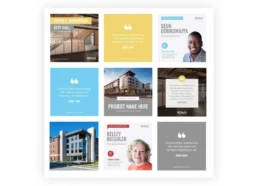
For both large and small businesses, social media a great opportunity to show consumers the more personal side of your business.
When done consistently and correctly, social media is an excellent tool to use in order to reach potential customers and communicate with existing customers. If you aren’t actively engaging with people on social media each day, you’re missing a huge opportunity to grow your business.
RD Olson, an Irvine, California based General Contractor does a good job on their Facebook page of showing a more personal side of their business. They typically post 6-7 times per month and only about 1/3 of their posts are about their current or past projects. The other 2/3 of of their posts are showcasing their staff in a different light…from a team softball league championship to executives in a retreat wearing red noses. Personalization is key!
Not sure which social media platforms are right for your business? Facebook is still king for B2C businesses (businesses selling direct to consumers), giving the most ROI when used correctly. LinkedIn comes in at a strong #2, in some cases giving better results than Facebook for B2B businesses (businesses selling to other businesses).
LinkedIn is a great place to interact with other businesses and its executives. Make sure you’re liking, commenting and engaging with people on a regular basis who are in your industry or are your potential clients.
Don’t forget the 4 to 1 rule. For every 4 posts, only 1 should be “salesy.” People don’t want to be sold to, they want to be educated. This rings true more than ever with social media.
Not sure what to post? Glimpses into life behind the scenes at your office or in the field is a great place to start. Residential construction companies should try posting tips for homeowners on interviewing contractors or upgrades on your home that have the best ROI.
Commercial construction companies should post energy saving tips for facility directors or do a snapshot on a new technology they are using on the job-site.
Remember, when you’re a resource to your customers, they keep coming back for more. Exciting content keeps them interested and your business top of mind.
2. Maintain Relationships with Email Marketing
Email marketing is one of those wonderful marketing tools that so many people skip over because they think it’s too expensive. In reality, there are free email marketing services, like MailChimp, that are great avenues for construction companies to attract new customers. You can send 12,000 emails each month at no cost!
MailChimp has templates you can use to have awesome looking emails without any design or coding trouble. AWESOME! You can also track who opens your email and tell if they clicked on any of the links that you included.
Email marketing is also a great way to maintain existing customer relationships by mailing weekly or bi-weekly articles to your past and current clients. These emails should contain great information that is educational to whomever is on the receiving end.
The 4 to 1 rule applies here to. Feel free to include a special if your company is running one…assuming you have emailed consistently over a set amount of time and those other emails have been informational.
Email marketing is a numbers game. The more people you email, the better response you will have.
Try adding an email capture tool to your website like this one from Hubspot. When people go to your website, there should be a pop-up that asks for an email address. You’ll be amazed at the results!
3. Keep Your Company Website Fresh with Great Content
When made correctly, websites can be your #1 sales person. They should be selling for you while you’re sleeping. Seriously…that’s how websites are supposed to work.
I get it, websites can be expensive for a start-up construction company. Our websites start at $5,000 for a templated version and custom sites start in the $20,000 range. For existing businesses that have a proven business model, this should be more important than any other sales or marketing expense you are considering. Trying to decide between construction marketing ideas? Make sure this on stays on the list!
Still don’t want to make the investment? That’s okay. You can start by building great content for your existing site that will help drive traffic.
Take a look at the blog one of the nation’s leading architects for schools, PBK out of Houston, Texas. Their blog is updated regularly with content that is intriguing and educational to their client base.
None…I mean none, of their content is a sales pitch. Even if they mention a recently completed project (which they rarely do), it is only used as an example in the context of the educational post.
PBK does integrate a couple of cool videos of their projects in this section, which they call “Insights.” My favorite is the unveiling of the new University of Houston locker room to the football team…what a great way to show the humanization component behind their job and company.
Update your blog a couple times a week with engaging content that suits your customer base. Include great imagery (nothing pixellated please) throughout your blog posts and website to get people to stay on the site longer and make sure your site has very clear calls to action on every page (preferably in a non-spammed pop-up). Finally, share your website content regularly with your social media followers to drive traffic.
When your budget allows, invest in a quality website that is Optimized for Search Engines. It’s by far the best dollar for dollar marketing and business development investment your business can make.
4. Grow Your Audience with Video Content
In addition to engaging content, people like videos. Video content is one of those construction marketing ideas that can really go a long way because people are 17X more likely to watch a video than read a blog post.
Take a look at this video that was made by Shapiro & Duncan in Rockville, Maryland. Over 75,000 views…pretty amazing!
Not sure where to start with making a video? Fortunately, there are ways to craft a well-thought-out, engaging marketing video for free by enlisting a film student or doing it yourself. To help, there are websites like Wistia that offer tutorials on how to create videos on an iPhone that look professional.
Need ideas of video content? Start with the most basics of your industry. Think: What Is Three Phase Electricity? What Is In Paint? What Is A Heat Pump?
If you still need inspiration, check-out Quora. It’s a question and answer forum that allows you to see what kinds of questions people have about your industry.
5. Develop a Customer Referral Program
As mentioned before, word of mouth is perhaps one of the most powerful marketing tools there is, which means a customer referral program should definitely be on your list of construction marketing ideas. Wondering how to go about setting up a customer referral program? It’s easy and can be done a number of different ways. From offering free products or services for existing customers to offering a reward for referring new customers, customer referrals go a long way in spreading the news about how great your company is.
My favorite is Sunworks PowerPay Referral Program. They have even come out with an app to make it super easy for their happy clients to refer friends and family. It clean, easy to use and gives great rewards. Need more ideas, check-out this list of 51 referral ideas.
6. Reach New Customers with Industry Partnerships
Partnering up with other construction businesses for joint projects is one of the construction marketing ideas that doesn’t cost any money and yields tremendous results.
Whether it’s teaming up for a special event, promotional giveaway, or webinar, you’ll end up enjoying access to an entirely new group of potential customers. After all, you get twice as much notice when you partner with another business.
Not sure where to start in developing these relationships? Try your local AGC (Association of General Contractors) chapter. They always have great events and are a fantastic place to meet General Contractors, Trade Contractors and even Architects. This is the August calendar for the San Diego chapter…there is a LOT going on!
7. Invest Time in Networking
Networking is perhaps the best way to market any type of business because it often results in referrals. Although networking can be time consuming, there are great platforms that will ensure you find the right type of networking events for your business.
Try 3 basic networking tips:
- Never Eat Lunch Alone: Always ask someone to join you for lunch…preferably someone from outside of your company.
- Build Genuine Relationships: The person who builds great relationships doesn’t think about what they want; they start by thinking about what they can give.
- Get Out There: Try a new networking group in your community at least once a quarter. You’ll be amazed at the amount of people you meet and how quickly your network grows.
Not sure which of these construction marketing ideas to start with? The philosophy of “never eating lunch alone” is a great place to start!
8. Use Photos
Don’t be afraid to toot your own horn by up-selling your recently completed projects through amazing photos. This is one of the construction marketing ideas that is so simple, but so often overlooked by construction companies.
Look at the portfolio section of the Cobb Architecture website. The photos are absolutely stunning and do a better than average job showing pictures of houses.
Your website should be full of high-resolution photos of every single project you have successfully completed. Great photos keep people on webpages 67% longer. The photos should be edited for optimal color and should be easy to navigate between.
ProTip: Try the apps Snapseed and VSCO for taking better photos with your iPhone.
Data shows that the credibility of a company that uses high-quality, professionally edited photos on their website increases by 186%.
Look at the photos from the website of Chasse Building Team. They are all professionally edited and show what could be boring and mundane photos in incredible lighting with pops of color and unique angles. Amazing!
9. Get Involved in the Community
Another effective free construction marketing idea is to get involved in the community. This can be as simple as helping fix up a home or volunteering at your kids high school football game. Either way, always wear a branded shirt and show your absolute best smile to everyone you interact with. You’ll be shocked at the feedback.
“We love working in our community and giving back to the area we call home. Our favorite charity is Habitat for Humanity. The dividends for our company are always positive and our employees absolutely love it.” – Jenn from HomePride in Savannah, Georgia.
No matter how you choose to get involved, you’re likely to gain exposure, which itself is priceless because it demonstrates that you care about the community. Make sure to post about your involvement on your social media page. It’s important for the community to see that you care about more than just your bottom line! Look at The KYA Group in California. They do quarterly events with the entire company that promote giving back to the community and always share the photos on their social media accounts.
10. Get Personal
This is one of our favorite construction marketing ideas! So few construction companies implement Getting Personal into their marketing campaigns.
Showing a personal side to your business gives your current and future clients an inside look into your team and culture behind the scenes. People want to engage with other people, not with businesses. Once businesses stop acting like businesses and start acting like people, they see their digital marketing campaigns yield tremendous results!
Layton Construction mixes their project photos and updates with photos of what’s going on inside the office. We love this photo of the Layton summer interns meeting with the President/CEO of the company.
Don’t be afraid to show pictures of your team outside of the office, especially if you’re a large company. KPRS, one of the largest general contractors in the country, does a great job of showcasing their team outside of the office. This provides a more personal experience to their clients and makes a large company seem more approachable and personable.
11. Optimize Your Site For Search Engines
Search is how people discover information on the internet. In a world where over 90% of online experiences start with a search engine, showing up on the front page of Google can be the deciding factor between a business that’s thriving and one that’s, well, bankrupt. As far as Construction Marketing Ideas are concerned, this might just be the most important to your long-term business success.
88% Of People Don’t Go Past The First Page Of Google
Look at our search for Custom Home Builder San Diego. The map section is skipped over by 83% of people completely, meaning most people jump right down to the results. Houzz ranks #1 and#2, but again…65% of people skip right over national websites like Houzz or Angies List.
The first business that shows up on google is MDD Homes, a custom home builder in San Diego. Perfect, that’s exactly what I was searching for in Google. Their site is perfect optimized for Google as a custom home builder, easy to use and has great videos of their projects.
The second and third sites are also optimized for Google, but aren’t quite as easy to use and navigate. With some quick changes to their site map and internal/external linking, these sites could easily surpass the current #1 spot.
The fourth site, which has the most Google reviews (almost all being perfect) is missing a huge opportunity to capture the #1 Google spot by not having an optimized site. A site redesign could yield Dream Design Builders some major traffic on Google!
The difference between ranking #1 and #2 isn’t massive when you’re talking about something like a homebuilder. But, the difference between ranking #1 and #2 if you’re a service company who works in responsive mode is massive! (ie AC Repair, Disaster Restoration, Plumbing Leak, etc).
In today’s information economy, search engines are the arbiters that determine what answers consumers get to their questions, and it’s critical for any brand to have a strong presence in search.
Google is the most popular website on the Internet, so why wouldn’t you leverage it? Through search engine optimization, you can rank higher on Google so you can get more visitors to your website. Imagine ranking #1 on Google for “AC Repair”, “New Air Conditioner” or “Best AC Company in Chicago.” It’s no secret your business would skyrocket and your outbound sales efforts would turn into responding to inbound website inquiries.
So, there you have it, 11 proven construction marketing ideas that any company would benefit from. Best of all, they’re all free. With the right amount of time management and dedication, any construction company can take one, two, or five of these effective construction marketing ideas and utilize them to grow their customer base, revenue, and business as a whole. What are you waiting for? Give one of these construction marketing ideas a try today.
Connect With Us Anytime!
Which one of these Construction Marketing Ideas is your favorite?
Interested in learning more? Connect with us today.

16 Big HVAC Marketing Ideas
Are you trying to get more customers and grow your business? Sure you are. Who isn’t? With the cost of digital advertising rising 5x faster than inflation in the US and 71% faster than the cost of TV ads, it can be tough to come up with HVAC Marketing Ideas that don’t break the bank. Here are 16 HVAC Marketing Ideas for your company to implement right away!
HVAC Marketing Idea #1: Comment On Blogs
A great way to get your website popular is to comment on blogs. Driving traffic to your website is key to your success…more traffic equals more people aware of your brand and more likely to use your services. For this to work, you have to leave comments on blogs that are related to your website, and the comments you leave have to be insightful.
If people feel that your comments are detailed and insightful, not only will they keep reading your comments, they’ll also head over to your website (when you leave a comment on a blog, you can typically leave your website URL).
HVAC Marketing Idea #2: Optimize Your Website for Search Engines
Search is how people discover information on the internet. In a world where over 90% of online experiences start with a search engine, showing up on the front page of Google can be the deciding factor between a business that’s thriving and one that’s, well, bankrupt. In today’s information economy, search engines are the arbiters that determine what answers consumers get to their questions, and it’s critical for any brand to have a strong presence in search.
Google is the most popular website on the Internet, so why wouldn’t you leverage it? Through search engine optimization, you can rank higher on Google so you can get more visitors to your website. Imagine ranking #1 on Google for “AC Repair”, “New Air Conditioner” or “Best AC Company in Chicago.” It’s no secret your business would skyrocket and your outbound sales efforts would turn into responding to inbound website inquiries.
HVAC Marketing Idea #3: Start A Blog
It doesn’t matter what kind of HVAC business you are running (small, large, residential or commercial) – you should still have a blog. Total Comfort in Chicago has a blog that accounts for over 70% of their monthly website traffic. That traffic is then converting into leads for their sales department to follow up on and then close into customers.
HVAC Marketing Idea #4: Leverage Message Boards
Message boards may sound boring and dull because they’ve been around for years, but they are still effective. There are millions of message boards on the Internet, and there is one for almost every topic. Check out message boards asking about HVAC repair advice and chime in when an expert is needed (make sure to explain why) or try message boards with moms asking questions about energy efficiency or indoor air quality.
If you can leave messages on popular boards like Yahoo Message Boards and give people good advice, you can drive a lot of traffic to your website. For national companies, like Service Experts or ARS, this is must do. Save money on traditional marketing (like door hangers or postcards) that data shows are ineffective in today’s world. Interact with your consumers where they are…on the web.
HVAC Marketing Idea #5: Email The Same Person 12 Times
Email is the HVAC Marketing Idea with by far the largest return on investment. Email has a median return on investment of 122%, more than four times higher then most other digital advertising mediums and 12 times higher than print or mail campaigns. HVAC companies find a return of $44 for every dollar spent on email marketing.
Email marketing needs to be a highly planned and consistent marketing attack to generate the desired returns. In fact, the average person doesn’t respond to a cold email until they are emailed 12 times. Here’s some help:
When to email: With the average white collar professional sending and receiving 121 emails a day, it’s important to catch their attention. Thursday is the best day to contact an HVAC prospect in order to qualify that lead. It is 19.1% better than Friday, which is the worst day. Most people tend to their personal business via email on Thursday and the data tells us that they do this from 4 to 6pm. It is 114% better than contacting a prospect at 11 to 12am, right before lunch.
HVAC Marketing Idea #6: Get Social
Gen X (ages 35-49) spend the most time on social media — 6 hours and 58 minutes per week. Millennials (ages 18-34) came in second, spending 6 hours and 19 minutes of their time per week on social networks. These are your customers, for the most part, and engaging them on social media is crucial to your HVAC marketing strategy. But, how do you do that?
Lastly, don’t forget to keep your goal in mind during any social media campaigns. Are you trying to get more Facebook likes, drive business to your website or have consumers purchase a product? For HVAC Service Companies, the goal of Social Media is most commonly to legitimize a brand. By getting likes on Facebook or shares on Instagram, you are effectively taking new customers down the path of a sale. These simple engagements bring a credible and trustworthy sense to your market. For instance, if your company has over 100 likes on Facebook and your competitor has less than 10, more often then not you will be viewed as the resource for your prospects HVAC needs.
HVAC Marketing Idea #7: Speak At Conferences
Speaking at conferences can be immensely beneficial for both local and national HVAC companies. National Companies should be speaking at technology expos, home improvement conferences, blogger expos and anywhere with big audiences…everyone needs an HVAC company for something. Local companies should be speaking in a public forum at least quarterly where your audience is in attendance. How about Homeowners Association meetings (give tips on Preventative Maintenance) or your local Home Show (show how to clean a drain line or give a demo on new home technology).
HVAC Marketing Idea #8: Write Beginner's Guides
By writing good content and giving it away for free, not only will you get a ton of traffic, but you’ll also get a lot of links. How about a Beginners Guide to Replacing Your Air Conditioner? Or what about a Beginners Guide to Digital Thermostats. These guides provide visually appealing information to your consumers that show your an expert and willing to provide them with information to make an informed decision.
HVAC Marketing Idea #9: Create A Case Study
If you already have happy customers, why not create a case study based on their experiences? Get them to talk about your HVAC service, why they contacted you, and the results they got. Case studies can help build credibility of your company and get you new customers. Add a picture of your customer and technician in your case study to personalize the message and give other potential customers a real feeling of trust with your business. Any time you can get real people, whether your employees or customers, front and center, the better.
HVAC Marketing Idea #10: Become A Guest Author
An easy way to get your company out there is to write guest blog posts on other blogs or news outlets. National Companies should be writing weekly blogs for major digital news outlets, think to CNBC to Huffington Post. Local HVAC companies should be writing blogs monthly for their local newspaper or other digital mediums that are popular in their local area. If you write guest blog posts on other blogs, not only will you get traffic and more branding, but you’ll also get links, which will help your SEO efforts.
HVAC Marketing Idea #11: Go To Networking Events
If you can’t be a speaker at a conference, it doesn’t mean you shouldn’t attend them. Every day there is a new event going on. You just have to find relevant ones to attend. Sooner or later, you’ll realize that people go to these events to meet other people. Some of the people you will meet will be useless, but a small percentage of the people you meet will turn into business relationships and friendships. You’ll be shocked to see what you can get out of an event, so make sure you start networking on a regular basis.
HVAC Marketing Idea #12: Leverage YouTube
Not only do videos now appear in search results, but you also can use them to show how good your services and products actually are. Plus, you can provide useful information to your customer base, creating instant credibility in how knowledgable you are in the HVAC field. Try a step-by-step video on changing an air filter, a short video on tips to save on energy bills or ways to improve your indoor air quality.
One of our first clients, a Los Angeles based Commercial HVAC firm, started their YouTube channel with informational videos geared towards Facility Directors on ways they could save money and upgrade their existing building. Some of the information was HVAC related, some of it wasn’t. The company positioned themselves as a resource for their target market and their sales (and YouTube hits) grew exponentially.
HVAC Marketing Idea #13: Have Amazing Customer Service
One of the easiest ways to increase the lifetime value of your customers is to offer exceptionally great customer service. By providing exceptionally great customer service, you will not only make happy customers, but you’ll have customers who will continue to come back. In the short run, this may end up costing your company a bit more money, but in the long run you’ll see the benefit because each customer will not only spend more money with you, but they’ll tell their friends about the great experience they had with your company.
Have a customer that is extremely unhappy with a Tune-Up? Consider refunding their money and asking for a second chance. The sour taste left in their mouth from a bad experience, and the potential bad recommendation is not worth the $149. Do you hand-write Thank You notes to every customer after a technician visit. Try it…the extra-special feeling with resonate well with your customers and set you leaps and bounds above your competitors.
HVAC Marketing Idea #14: Ask For Referrals
Do you already have customers? If so, ask them for referrals. It’s remarkably effective and most HVAC companies don’t spend their time or resources on their existing customer base.
Email or look up your current customers on social sites like LinkedIn and see who they’re connected with. If you think someone they know can benefit from your product or service, ask for an introduction. For instance, you may want an introduction to a property manager or building owner that you know you can provide great service to. Simply ask your network that is connected with your target to put in a good word or introduce you via email. You will be surprised at the results. Here are some keys when asking for referrals:
HVAC Marketing Idea #15: Get Press
The more people talk about your company in a positive way, the more people will come to your website and check out what you are offering. The hard part about press is getting the attention of the major news outlets; however, it is easy to get the attention of blogs. One way that I like to get press is to email bloggers asking if they would like to interview me. Although that sounds silly, a small percentage of the bloggers you email will say yes.
Don’t be shy; ask bloggers if they would be interested in interviewing you. What’s the worst that can happen? They’ll say no. For national companies, this is easy. For local companies with a smaller pool of bloggers, it can be a bit trickier. During peak seasons, reach out to a local blogger or news outlet about interviewing you for a story on tips to stay cool (or warm) in your home. For Veterans Day, reach out about a story on the importance on giving back to our Veterans. For any community event your involved in, offer to give an interview about your experience (assuming it’s positive).
HVAC Marketing Idea #16: Retarget Your Visitors
Consumers who are retargeted in digital channels are 70% more likely to convert. What does this mean? Lets say you have an awesome blog post that someone finds through Google or your Social Media Marketing. They land on your site, read your blog and explore your website for a few minutes. All of the sudden they are gone, no phone call, no email, and no idea who they were. You spent all this time and money on getting people to your HVAC website and you have nothing to show for it.
Retargeting embeds a code on your website, allowing you to capture that same user over and over again while they are doing their normal internet browsing, keeping your HVAC company at the top of their mind should the need arise. Retargeting is a form of online advertising that can help you keep your brand in front of bounced traffic after they leave your website. Historically, only 2-5% of first time visitors to your HVAC website will convert on the first visit. Retargeting your visitors in your HVAC marketing plan is designed to help your company reach the 95-98% of users who don’t convert the first time. It is little money well spent on a
target that has shown an interest in your services at one point. Keep this marketing attack going and watch your return on investment skyrocket.
Conclusion
The lesson here is that HVAC marketing doesn’t need to be expensive to grow your business. It simply needs to be planned out with goals and objectives to meeting your goals. If there is one thing you learn with these HVAC marketing ideas, we hope its that you learned at least one new tactic toward growing your business .
Interested in learning more? Connect with us today.

13 Benefits of Social Media Marketing for Contractors
13 Benefits of Social Media Marketing for Contractors
Whether you’re an international Fortune 500 company or a home service provider serving local residents, as a business in the construction industry, a strong social media presence is more important than ever. In our most recent poll, 90% of contractors who were active on social media claimed that there were numerous benefits of social media marketing. They also indicated that social media generated immense exposure for their company.
Social networks are now a substantial part of every marketing strategy, and the benefits of social media marketing are so great that anyone not implementing this cost-effective resource is missing out on a phenomenal marketing opportunity.
Benefits of social media marketing include increased brand recognition, improved brand loyalty, more opportunities to convert leads into customers and better search rankings.
It’s easy to see that there are many benefits of social media marketing and that social media marketing is a key element for success in any marketing strategy. Many businesses realize the potential for business growth using the platform and agree that there are numerous benefits of social media marketing. However, some of these professionals are unsure of which tactics to apply and if they are effective.
According to Social Media Examiner, about 96% of companies are currently participating in social media marketing, but 85% of participants aren’t sure which tools are the best to use. With our help, we will diminish the confusion by thoroughly explaining the benefits of social media marketing to grow your business.
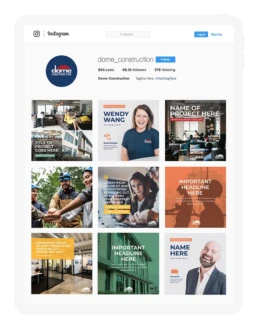
1. Increased Brand Awareness.
Every opportunity you have to publish content relating to your company and increase your brand’s visibility is incredibly valuable. Your social media networks are just new channels for your brand’s voice and content, making your business easier and more accessible for new customers, and making you more familiar and recognizable for existing customers. For example, a frequent Twitter user could hear about your company for the first time only after stumbling upon it in a newsfeed. Or, an otherwise apathetic customer might become better acquainted with your brand after seeing your presence on multiple networks.
Each post that is shared will be introduced to a new network of individuals, which can lead them to becoming potential customers, and the more people who know about your business, the better.
Social media is one of the most cost-efficient digital marketing methods used to syndicate content and increase your business’ visibility. Implementing a social media strategy will greatly increase your brand recognition since you will be engaging with a broad audience of consumers.
2. Improved Brand Loyalty.
One of the main goals of almost all businesses is developing a loyal customer base. Considering that customer satisfaction and brand loyalty typically go hand in hand, it is important to regularly engage with consumers and begin developing a bond with them. Social media is not just limited to introducing your brand’s products and promotional campaigns. Customers see these platforms as a service channel where they can communicate directly with the business.
According to a report published by Texas Tech University, brands who engage on social media channels enjoy higher loyalty from their customers and clearly reap the benefits of social media marketing. The report concludes “Companies should take advantage of the tools social media gives them when it comes to connecting with their audience. A strategic and open social media plan could prove influential in morphing consumers into being brand loyal.” Another study published by Convince&Convert found that 53% of Americans who follow brands in social are more loyal to those brands.
"The millennial generation is known for being the most brand loyal customers of all. Born between the early 1980’s and the early 2000’s, millennials are the largest generation in US history -– and will soon completely consume the market. Studies show that this segment of customers is 62% more loyal to brands that directly engage with them on social media. Since these technology natives require communication with their brands, businesses must implement social media marketing to get the attention of their most influential consumers."
-Joseph, Social Media Manager
3. More Opportunities to Convert
Every post you make on a social media platform is an opportunity for customers to convert.
When you build a following, you’ll simultaneously have access to new customers, recent customers, and old customers, and you’ll be able to interact with all of them. Every blog post, image, video, or comment you share is a chance for someone to react, and every reaction could lead to a site visit, and eventually a conversion.
Not every interaction with your brand results in a conversion, but every positive interaction increases the likelihood of an eventual conversion. Even if your click-through rates are low, the sheer number of opportunities you have on social media is significant, allowing engaging companies to reap the benefits of social media marketing.
4. Higher Conversion Rates
With increased visibility, your business gains more opportunities for conversion. Every blog post, image, video, or comment may lead viewers to your company’s website and increase traffic. Social media marketing allows your business to give a positive impression through a humanization factor. When brands are interactive by sharing content, commenting, and posting statuses on social media, it personifies a brand. People prefer to do business with other people, rather than companies.
Social media marketing results in higher conversion rates in a few distinct ways. Perhaps the most significant is its humanization element; the fact that brands become more humanized by interacting in social media channels.
Social media is a place where brands can act like people do, and this is important because people like doing business with other people; not with companies.
Additionally, studies have shown that social media has a 100% higher lead-to-close rate than outbound marketing, and a higher number of social media followers tends to improve trust and credibility in your brand, representing social proof. As such, simply building your audience in social media can improve conversion rates on your existing traffic.
People use social media platforms to stay connected to their friends, family, and communities. Since people are already talking, why not throw your brand into the mix? More likely than not, they’ll mention your brand to a friend when your products or services are needed, overall providing your business with social proof of its quality. As reported by Social Media Examiner, about 66% of marketers saw lead generation benefits by using social media platforms at least 6 hours per week. Putting your brand in an atmosphere where people are sharing, liking, and talking, can only improve the conversion rates on your existing traffic.
Additionally, studies have shown that social media has a 100% higher lead-to-close rate than outbound marketing, and a higher number of social media followers tends to improve trust and credibility in your brand, representing social proof. As such, simply building your audience in social media can improve conversion rates on your existing traffic.
5. Your Competition Is Already Involved
Your competitors are already involved on social media, which means your potential social media traffic and conversions are being poached. Don’t let your competitors reap all the benefits while you stand idly by. If, somehow, your competition is not involved on social media, there’s even more of a reason to get started—the field is open.
6. Higher Brand Authority
Customer satisfaction and brand loyalty both play a part in making your business more authoritative, but it all comes down to communication. When consumers see your company posting on social media, especially replying to customers and posting original content, it makes you appear more credible.
Regularly interacting with customers demonstrates that your business cares about customer satisfaction, and is available to answer any questions that they might have.
Satisfied customers are eager to spread the word about a great product or service and they usually turn to social media to express their opinion. Having customers mention your business on social media will advertise your business, and show new visitors your value and brand authority. Once you obtain a few satisfied customers who are vocal about their positive purchase experience, you can let the advertising be done for you by actual customers who enjoyed your product or service.
Interacting with your customers regularly is a show of good faith for other customers. When people go to compliment or brag about a product or service, they turn to social media. And when they post your brand name, new audience members will want to follow you for updates. The more people that are talking about you on social media, the more valuable and authoritative your brand will seem to new users. Not to mention, if you can interact with major influencers on Twitter or other social networks, your visible authority and reach will skyrocket.
7. Increased Inbound Traffic
Without marketing your business on social media, your inbound traffic is limited to your usual customers. The people familiar with your brand are likely searching for the same keywords you already rank for. Without utilizing social media as part of your marketing strategy, you’ll have much more difficulty reaching anyone outside of your loyal customer circle.
Every social media profile you add is another path leading back to your site, and every piece of content you syndicate on those profiles is another opportunity for a new visitor.
Social media is a melting pot of different types of people with varying backgrounds, behaviors and ways of thinking. The more quality content you syndicate on social media, the more inbound traffic you’ll generate, and more traffic means more leads and more conversions.
Syndicating your content on as many platforms as possible allows these individuals to organically reach your business. For instance, perhaps someone in an older demographic of consumers will search for your website using a particular keyword on Facebook, but a millennial could begin their search by using a different social media platform entirely, because they search for products totally differently. By marketing on social media you can effectively open your business to a wider variety of versatile consumers all over the world, allowing your business to take full advantage of the benefits of social media marketing.
8. Decreased Marketing Costs
According to Hubspot, 84% of marketers found as little as six hours of effort per week was enough to generate increased traffic. Six hours is not a significant investment for a channel as large as social media. If you can lend just one hour a day to developing your content and syndication strategy, you could start seeing the results of your efforts. Even paid advertising through Facebook and Twitter is relatively cheap (depending on your goals, of course). Start small and you’ll never have to worry about going over budget—once you get a better feel for what to expect, you can increase your budget and increase your conversions correspondingly.
9. Better Search Rankings
Some major benefits of Social Media Marketing are increased website traffic, which translates into better rankings on Google. SEO, or Search Engine Optimization, is the best way to capture relevant traffic from search engines, but the requirements for success are always changing.
It’s no longer enough to regularly update your blog, ensure optimized title tags and meta descriptions, and distribute links pointing back to your site. Google and other search engines may be calculating their rankings using social media presence as a significant factor, because of the fact that strong brands almost always use social media.
Being active on social media could act as a “brand signal” to search engines that your brand is legitimate, credible, and trustworthy. That means, if you want to rank for a given set of keywords, having a strong social media presence could be almost mandatory.
Although posting on social media might get your business some site traffic, more effort than that is required to see significant success. Search engine optimization is very important for achieving higher page rankings and obtaining traffic to your business website. While social media doesn’t directly increase search engine rankings, Social Media Examiner states that more than 58% of marketers who have been using social media for one year or longer still see improved search engine rankings. Being able to rank in the top positions for your keywords will revolutionize your traffic and continue to generate positive results for your business.
Let’s face it, everyone uses Google to find information, and they likely won’t navigate past page 1 because their answer normally is on the first page of results. If your business website isn’t ranked towards the top of search engine results, you should probably adjust your search engine optimization strategy.
To give yourself the best chance of ranking better through social media, have a marketing agency create high quality content that integrates your targeted keywords. Content such as blogs, infographics, case studies, business information, and employee photos will make your business’s social media profile intriguing and credible. Once your brand begins posting quality content, you’ll begin to build a social media community where followers will “like” and “share” your content. Most importantly, it gives you more opportunities to get in front of industry influencers who will write about your business and provide links back – which will help to directly increase search engine rankings.
10. Richer Customer Experiences
Social media, at its core, is a communication channel like email or phone calls. Every customer interaction you have on social media is an opportunity to publicly demonstrate your customer service level and enrich your relationship with your customers.
Creating a voice for your company through these platforms is important in humanizing your company. Customers appreciate knowing that when they post comments on your pages, they will receive a personalized response rather than an automated message. Being able to acknowledge each comment shows that you are attentive of your visitors’ needs and aim to provide the best experience. Businesses who interact and respond to their customers needs are most likely to reap the full benefits of social media marketing.
For example, if a customer complains about your product on Twitter, you can immediately address the comment, apologize publicly, and take action to make it right. Or, if a customer compliments you, you can thank them and recommend additional products. It’s a personal experience that lets customers know you care about them.
11. Improved Customer Insights.
One of the most valuable advantages of social media is marketplace insight. What better way to know the thoughts and needs of your consumers than by directly talking to them? By monitoring the activity on your profiles you can see customer’ interests and opinions that you might not otherwise be aware of if your business didn’t have a social media presence.
Social media also gives you an opportunity to gain valuable information about what your customers are interested in and how they behave, via social listening. For example, you can monitor user comments to see what people think of your business directly. You can segment your content syndication lists based on topic and see which types of content generate the most interest—and then produce more of that type of content. You can measure conversions based on different promotions posted on various social media channels and eventually find a perfect combination to generate revenue.
Using social media as a complementary research tool can help gain information that will aid you in understanding your industry. Once you gain a large following, you can use additional tools to analyze the demographics of your consumers. Another insightful aspect of social media marketing is the ability to segment your content syndication lists based on topic, and identify which types of content generate the most impressions. These tools give you the ability to measure conversions based on posts on various social media platforms to find the perfect combination for generating revenue.
"One of the best benefits of social media marketing is access to customer data. We are able to see behaviors and patterns of target customers, providing a new insight into their likes, dislikes and buying patterns. We translate this information to the Business Development teams of our clients for a win-win."
-Joseph, Social Media Manager
Get Started.
The longer you wait, the more you have to lose. Social media marketing, when done right, can lead to more customers, more traffic, and more conversions, and it’s here to stay. If you’re interested in getting started but aren’t sure where to begin—check out this guide to Social Media Marketing and connect with us. We’d love to chat!
Interested in learning more? Connect with us today.

12 Reasons Why the Best Employees Quit, Even When They Like Their Job
Regardless of the reasons why the best employees quit, losing a great employee is a terrible thing. There’s the expense of finding, on-boarding, and training a replacement. There’s the uncertainty of how a new employee will work out. There’s the hardship on the rest of your staff until the position can be filled. We have uncovered the top 12 reasons why the best employees quit, even if they like their job.
Ever had an incredible employee, and thought, “This is the one!” They were smart, engaged, driven, and seemed to really love the job. You thought, “We’re going to be together forever!” You could really see yourself promoting this person, mentoring them, watching them climb the ranks in your company …
And then one day, they quit.
They might give you the, “It’s not you, it’s me …” speech, but what does it actually mean?
Sometimes there’s a solid reason–the person was a bad fit for the team, or moved away for personal reasons, or was offered an opportunity too great to pass up. In those cases, even if it’s a difficult transition, it feels fundamentally right.
But what about the rest? What are the reasons the best employees quit?
It’s pretty incredible how often you hear managers complaining about their best employees leaving, and they really do have something to complain about — few things are as costly and disruptive as good people walking out the door.
Managers tend to blame their turnover problems on everything under the sun, while ignoring the crux of the matter: people don’t leave jobs; they leave managers.
The sad thing is that this can easily be avoided. All that’s required is a new perspective and some extra effort on the manager’s part. When trying to uncover the reasons why the best employees quit, we looked beyond pay, vacation time and bonuses.
Organizations know how important it is to have motivated, engaged employees, but most fail to hold managers accountable for making it happen.
According to the U.S. Bureau of Labor and Statistics, employees are only staying in a job on average for 1.5 years, so retention is getting harder all over. But it doesn’t have to be that way. Keeping your best employees starts with understanding why people leave. Here are twelve of the top reasons the best employees quit.
1. Stagnation
People don’t want to think they’re locked into a groove and will come to the same place and do the same thing every day for the next 20 or 40 years. People want to feel that they’re still moving forward and growing in their professional life. They want to have something to aspire to. If there’s no career ladder or structure for advancement, they know they’ll need to seek it somewhere else. In the meantime, they’re far more likely to be bored, unhappy, and resentful–things that affect performance and the entire team’s morale.
Have you outlined a clear path for advancement for your best employees?
Or are they looking at a dead-end job? They might be the best cashier / phone operator / junior undersecretary you’ve ever had, but that doesn’t mean they want to stay in that position forever.
It pays to get to know your employee’s goals and help them see how they can achieve them within your company.
2. No Equality
No one wants to stick around in a workplace that doesn’t treat them fairly. Do a quick gut-check: Are you paying women less than men? How many women sit on your Executive Committee? How about minorities? Millennials?
Younger workers in particular, are not willing to stick around at a company that is racist, sexist, ageist, or otherwise discriminatory in any way. Loosing a large amount of employees under 35 and looking for reasons why the best employees quit? Look at the equality in your management circle and do everything you can to make things more equal.

3. Overwork
Some periods of stress and feeling overwhelmed come with most jobs, but nothing burns out great employees faster than overwork. And often it’s the best employees–the most capable and committed, your most trusted–you overload the most. If they find themselves constantly taking on more and more, especially in the absence of recognition such as promotions and raises, they come to feel they’re being taken advantage of. And who could blame them? You’d feel the same.
4. Vague or Ever-Changing Visions
There’s nothing more frustrating than a workplace filled with visions and big dreams, but no translation of those aspirations into the strategic goals that make them achievable. Without that connection, it’s all just talk. In a recent survey uncovering the reasons why the best employees quit, vague or ever-changing visions were almost always in the top 5.
What talented person wants to spend his or her time and energy in support of something undefined? People like to know that they’re working to create something, not just spinning their wheels.
You or the CEO may have a vision for where the company is going — but do all your employees? Some of the most successful companies are able to attract and retain great employees because they are great at communicating their vision all the way from the top down to the front-line workers. (And don’t confuse vision with financials; it needs to be bigger than that, especially if the employee in question doesn’t have stock options!)
5. Lack of Respect
There’s an old saying that employees don’t leave a company, they leave a manager. No matter how much you like, respect, or appreciate an employee, if they don’t know it, they may leave. Make sure your interactions with employees are always respectful, and that you look for ways to actively value their contribution.
6. Profits over people
When an organization values its bottom line more than its people, the best people go elsewhere, leaving behind those who are too mediocre or apathetic to find a better position. The result is a culture of underperformance, low morale, and even disciplinary issues. Of course, things like profit, output, pleasing stakeholders, and productivity are important–but success ultimately depends on the people who do the work.
7. Lack of recognition
Even the most selfless people want to be recognized and rewarded for a job well done. It is part of who we are as human beings. When you fail to recognize employees, you’re not only failing to motivate them but also missing out on the most effective way to reinforce great performance. Even if you don’t have the budget for raises or bonuses, there are lots of low-cost ways to provide recognition–and a word of appreciation is free. People won’t care if they don’t feel noticed.
8. Lack of trust
Your employees have a vantage point for viewing your behavior and weigh it against your commitments. If they see you dealing unethically with vendors, lying to stakeholders, cheating clients, or failing to keep your word, the best and most principled of them will leave. The rest, even worse, will stay behind and follow your lead. Looking for the reasons why the best employees quit? Ask yourself if they trust their manager and the companies business practices.
9. Excessive hierarchy
Every workplace needs structure and leadership, but a rigidly top-down organization makes for unhappy employees. If your best performers know they’re expected to produce without contributing their ideas, if they’re not empowered to make decisions, if they’re constantly having to defer to others on the basis of their title rather than their expertise, they don’t have much to be happy about.
Trying to uncover the reasons the best employees quit at your company? Ask yourself if employees are empowered to make their own decisions. Do you assign 6 people to complete the same task or do you trust your employees enough to have one person handle something.
10. No Morale
Even if a particular employee is positive and energetic, it is draining to be surrounded by people with low morale. Team identity and unity may be key to engaging and retaining those great employees you want.
When everyone else is unhappy and not putting in a good effort, no one wants to work there. When uncovering the top reasons the best employees quit, we found a significantly higher turnover in companies with uber emotional managers and office staff that seem to hate the company. The problem: the office staff stay (and complains everyday) while the top employees leave for a more positive work environment. If you notice a negative person or low morale on a particular team, fix it right away!
11. No Challenge or Autonomy
If you aren’t providing the opportunity for challenging, engaging work, you’re naturally going to lose those employees who want to be challenged or have a certain measure of autonomy over their work and lives. Few people are happy being micromanaged or simply toeing the company line when they have ideas for innovation.
No one wants to feel infantilized or that they aren’t trusted to make the most basic decisions in their work. People want the opportunity to be the expert in their own job.
Are you providing opportunities for professional development? Do you discuss ways to be more effective leaders as a group? Try providing your employees with consistent information to help them reach their personal professional goals.
12. Too Rigid Work Environment
Times have changed. Long gone are the days where people are satisfied clocking in at 8:00pm and leaving at 5:00pm. With the additions of smartphones to the workforce, employees are connected to their jobs 24/7/365. In turn, they don’t want to be connect to their desk for 8 straight hours without the flexibility to take a half-day here and there or work from home a couple times each month.
Studies show that a flexible work environment actually produces better results and gives employees the increasingly sought after “work-life balance.”
It’s essential to promote flexibility at your company in order to remain competitive as an employer. In a recent global study with Randstad, we found that the top benefit that Gen Z workers and Millennials want is flexibility.
Employees are expected to be reachable outside of the office by phone or email and the 9-to-5 workday no longer exists.
Aside from telecommuting and flexible schedules, more companies should allow employees to do work outside of their job description. An example of this is Google’s 20% program, which prevents employees from having to do the same projects everyday and allows them to be more creative.
Looking for reasons why the best employees quit at your company? Explore alternative work schedules to accommodate families and work-life balance. You may be surprised at productivity increases.
Conclusion
Ultimately, many people who leave their job do so because of the boss, not the work or the organization. When exploring why the best employees quit, ask yourself what you may be doing to drive your best people away, and start making the changes needed to keep them.
Practice actively listening and engaging with all your employees on a regular basis. One idea is to implement stay interviews (instead of exit interviews) to ask your current employees why they stay with the company. It helps to build a strong level of trust and engagement with employees when they are allowed to bring both their goals and their concerns to a manager — before it’s too late to identify and solve the problems.